

Burdur Mehmet Akif Ersoy University (MAKÜ) has taken an important step to bring an international perspective to its research and education activities. Two foreign scientists, who have made significant contributions in their fields, have been appointed as part-time faculty members in the Department of Molecular Biology and Genetics at the Faculty of Science and Letters of the university.
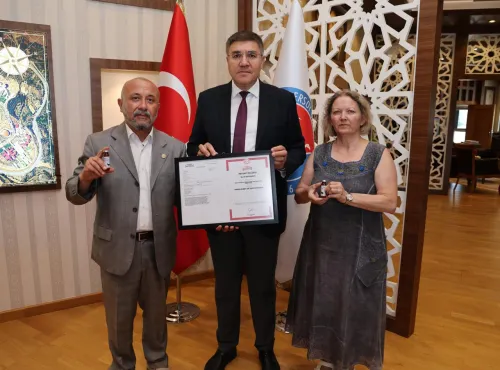
In this context, Prof. Dr. Mikako Fujita from Kumamoto University in Japan and Prof. Dr. Deyu Xie from North Carolina State University in the United States have joined the academic staff of MAKÜ in accordance with Article 46 of the Law No. 2547 of the Higher Education Council (Article 46: Appointment of Qualified Researchers with a Doctorate Degree, Turkish or Foreign Nationals, as Part-Time Faculty Members in Higher Education Institutions).
It is aimed that Prof. Dr. Fujita and Prof. Dr. Xie, who stand out with their expertise in the field of Molecular Biology and Genetics, will contribute to the university's graduate education processes, research projects, and international scientific collaborations. These appointments are considered one of the important steps in MAKÜ's vision of establishing stronger relationships with global academic networks and enhancing its scientific production capacity with qualified researchers.
While the MAKÜ Research and Development Coordination Office plays an active role in the execution of the process, efforts to develop international academic collaborations and complete the relevant appointment processes were carried out in a coordinated manner.
MAKÜ Rector Prof. Dr. Hüseyin Dalgar wished success to Prof. Dr. Mikako Fujita and Prof. Dr. Deyu Xie in their new roles, stating, “I believe that the inclusion of two new international academics in our academic staff will make significant contributions to the scientific development of the university.”
MAKÜ aims to open new areas of work for its students and academic staff through academic collaborations established with qualified researchers from different countries, support interdisciplinary research, and increase its visibility in the international scientific community.