
Needs analysis was conducted for the Village University Project of MAKÜ
In the needs analysis study organized within the scope of the Village University Project carried out by Burdur Mehmet Akif Ersoy University (MAKÜ), the strengthening of rural development and the improvement of education in agriculture and animal husbandry were addressed. In the meeting attended by public institutions, agricultural chambers, and village muhtars, the needs of producers and the studies to be carried out in the upcoming period were evaluated.
Yapılış Tarihi | 15 October 2026, Thursday

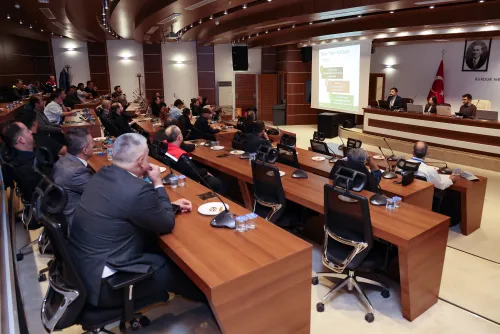
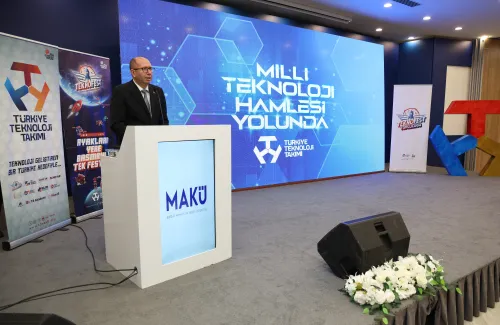
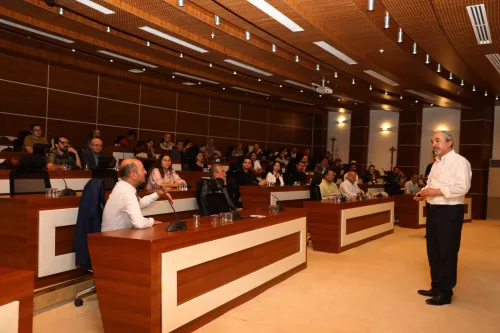
A needs analysis study was conducted within the scope of the Village University Project of Burdur Mehmet Akif Ersoy University (MAKÜ). In the meeting attended by provincial and district agricultural units, representatives of agricultural chambers, village muhtars, and academics involved in the project, a presentation was made by the Village University Project Coordinator Prof. Dr. Umut Yanardağ.
In the presentation, information was provided about MAKÜ's educational activities in agriculture and animal husbandry, projects aimed at rural development, and the supports offered to producers. Additionally, participants' opinions and suggestions were gathered to evaluate the current status of the activities carried out in villages and to plan the activities to be conducted in the upcoming process.
The process from Farmer School to Village University
Prof. Dr. Umut Yanardağ stated that the foundation of the work carried out by MAKÜ in the field of agriculture and animal husbandry is the university's goal of directly transferring its knowledge and expertise to producers.
Prof. Dr. Yanardağ reported that 4,896 farmers were reached within the scope of the Farmer School and a total of 446 hours of training programs were conducted, expressing that video content, television programs, and educational documents were prepared to ensure the sustainability of educational activities. He noted that certification studies aimed at improving farmers' knowledge and skills were also carried out within the program.
Emphasizing that the Village University Project, which was launched after the experience of the Farmer School, is not limited to agriculture and animal husbandry, Prof. Dr. Yanardağ stated that the project also encompasses social, cultural, and environmental development in addition to economic development.
Prof. Dr. Yanardağ indicated that the project, which was accepted in February 2025 and started its activities in March, has a timeline of 28 months, stating that to date, 2,993 people have been brought together in training and activities within the scope of the project.
Training for different age groups in 31 villages
Prof. Dr. Yanardağ noted that studies were conducted in 31 villages within the scope of the Village University Project, stating that the training programs were prepared considering the needs and population structures of the villages.
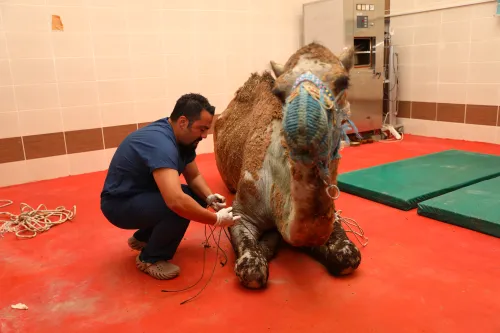
Prof. Dr. Yanardağ reported that different training models were applied for children, youth, and the elderly, noting that teaching staff from various academic units of the university participated in the project. He stated that a wide academic staff contributed to the project, from the Faculty of Science and Letters to the conservatory, and from engineering units to the Faculty of Veterinary Medicine, emphasizing that this enabled the implementation of studies addressing the different needs of the villages.
Prof. Dr. Yanardağ indicated that many programs were organized in villages, ranging from cultural and artistic activities to social events, and from environmental awareness to disaster preparedness, expressing that university student communities also played an active role in these activities.
Agriculture and animal husbandry training are among the priority topics
In the economic development aspect of the project, training on large and small livestock breeding, milk and dairy product production, and local food production stands out. Smart agriculture practices, financial and technological literacy, marketing, entrepreneurship, and cooperatives are also among the important topics of the training programs.
Prof. Dr. Yanardağ stated that the activities are not limited to providing education, but also include consultancy and mentorship support for producers. Citing the cooperative work carried out in Susuz village of Bucak District as an example, Prof. Dr. Yanardağ expressed that support mechanisms were developed to enable producers to apply the knowledge they learned.
Prof. Dr. Yanardağ noted that they also focus on the different needs of rural life; activities were carried out in the fields of disaster preparedness, environmental awareness, health screenings, oral and dental health, and physiotherapy. He stated that research was conducted to increase the resilience of villages against disasters and that studies were carried out to develop rural resilience based on the data obtained.
New period activities will be planned with participants
Prof. Dr. Yanardağ stated that one of the main objectives of the meeting is to strengthen cooperation among institutions operating in the field of agriculture and animal husbandry, emphasizing the importance of the complementary nature of the studies carried out by different institutions in similar areas.
Expressing that they want to benefit from the experiences of relevant institutions to accurately identify the needs of producers, to reach a wider audience with the trainings, and to make the information provided applicable in the field, Prof. Dr. Yanardağ gathered opinions from participants about training contents, application support, consultancy, and mentorship processes.
The workshop also addressed which topics the trainings should be concentrated on, the duration and implementation methods of the programs, practices that would facilitate producers' participation in trainings, and how the support needed after the training could be provided.
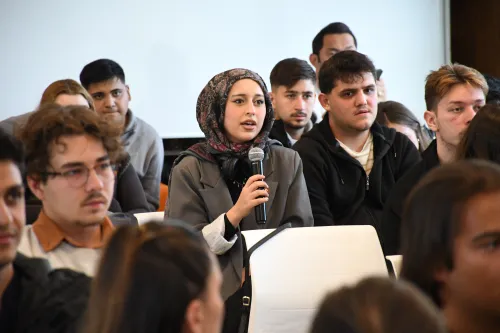
The needs analysis study, which continued with a question-and-answer section, aims to contribute to shaping the activities in the remaining period of the Village University Project according to the needs of producers and to strengthen the cooperation between the university and the rural areas.