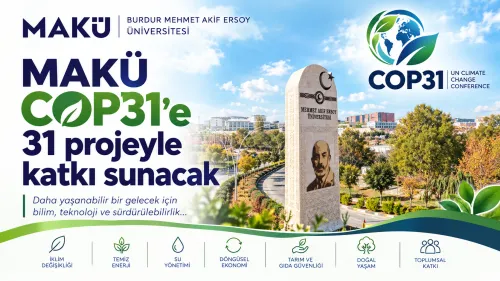


Burdur Mehmet Akif Ersoy University (MAKÜ) is preparing to bring its efforts to mitigate the effects of climate change and create a sustainable future to the international platform. The 31 projects prepared by different faculties and research units of the university offer solutions that align with the goals set for the 31st Conference of the Parties to the United Nations Framework Convention on Climate Change (COP31).
Approximately 100,000 people from 197 countries are expected to participate in COP31, which is planned to be held at the Antalya EXPO Center from November 9-20, 2026. During the conference process, where global climate policies will be addressed, MAKÜ aims to transform its scientific research into concrete solutions for environmental issues.
A wide range of projects from lake conservation to clean energy
The projects prepared by MAKÜ focus on many areas such as climate change, sustainable agriculture, food security, clean energy, artificial intelligence, biotechnology, circular economy, and the conservation of natural resources.
In the project portfolio, the protection of the lake basin, especially Lake Burdur and Lake Salda, effective management of water resources, combating drought, and increasing resilience to climate change stand out. Microalgae biotechnology, green technologies, sustainable packaging systems, and circular bioeconomy are also among the university's areas of work.
Ensuring that the agriculture and livestock sectors adapt to climate change, strengthening food security, and developing innovative sensor technologies are also important topics of the projects. In addition, it is planned to contribute to sustainability goals in various fields through artificial intelligence-supported energy solutions, disaster management, decision support systems, and efforts to raise climate awareness among youth.
Scientific studies aligned with COP31 themes
The project studies prepared in accordance with the COP31 themes by the Higher Education Council cover priority areas such as zero waste, food security, climate-resilient cities, clean energy transformation, green industrialization, youth and education, water ecosystems, and biodiversity. Climate finance and artificial intelligence-supported sustainable solutions are also among the topics aimed at providing scientific contributions.
Projects that bring together different disciplines also highlight the role of universities in producing scientific knowledge and transforming this knowledge into social benefit in the fight against climate change.
Sustainability goal from local to global
The 31 projects prepared bring together MAKÜ's research capacity and interdisciplinary collaboration approach with sustainable development goals. The university aims to ensure that the locally developed studies, especially through the protection of the region's natural resources and the support of its experience in agriculture and livestock with environmental solutions, create a broader impact.
With its projects aimed at the COP31 process, MAKÜ aims to contribute to climate action, transform its innovative research into social benefit, and strengthen national and international collaborations.