
Ramsar Secretary General Mumba's message on the protection of wetlands at MAKÜ
Ramsar Secretary General and MedWet Representative Dr. Musonda Mumba visited Mehmet Akif Ersoy University (MAKÜ) in Burdur as part of her inspections at Lake Burdur. Meeting with Rector Prof. Dr. Hüseyin Dalgar, Mumba later met with students to discuss the protection of wetlands, the Ramsar Convention, and the sustainability of ecosystems.
Date | 16 November 2026, Monday

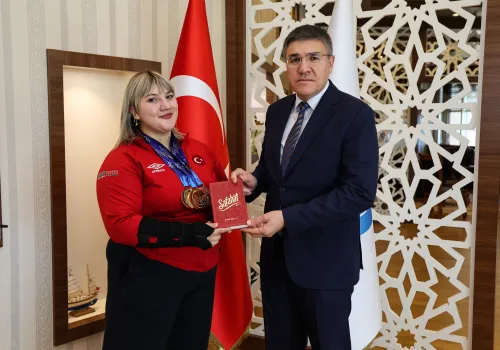
Ramsar Secretary General and MedWet Representative Dr. Musonda Mumba, who came to Burdur to examine Lake Burdur, one of the 14 wetlands protected under our country's Ramsar Convention, visited Burdur Mehmet Akif Ersoy University as part of her program.
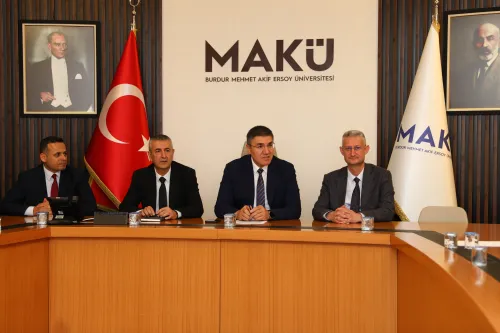
Accompanied by Prof. Dr. İskender Gülle, a faculty member of the Biology Department at MAKÜ Faculty of Arts and Sciences and Director of the Salda Lake Science, Education, and Nature Conservation Application and Research Center, Mumba met with MAKÜ Rector Prof. Dr. Hüseyin Dalgar in his office. During the meeting, they discussed the protection of wetlands, the ecological importance of the lakes in the region, and potential studies that could be conducted in this area.
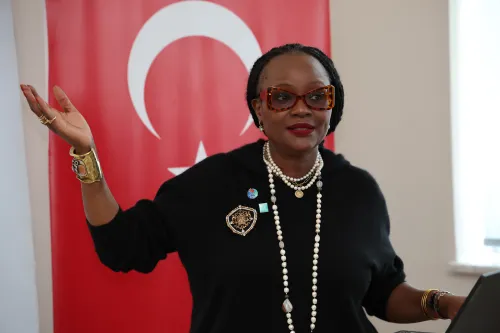
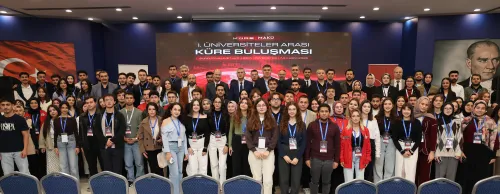
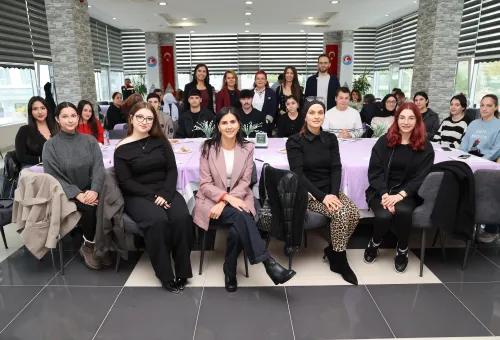
After the rectorate visit, Dr. Musonda Mumba went to the Faculty of Arts and Sciences and met with students from the Geography and Biology departments. In the program held in the faculty's conference hall, she provided information about international efforts for the protection of wetlands and the importance of the Ramsar Convention.
Reminding that the Ramsar Convention was adopted in 1971 in the city of Ramsar, Iran, Mumba emphasized that it is the world's oldest multilateral environmental agreement. Pointing out that international environmental agreements like the Climate Convention emerged in later years, Mumba referred to the pioneering role of the Ramsar Convention in the protection of wetlands.
Stating that wetlands are not just lakes, Mumba expressed that streams, rivers, lakes, and other water sources exist in a natural integrity with each other. She highlighted the great importance of preserving these connections for the healthy functioning of ecosystems.
Mumba also addressed the effects of urbanization on wetlands, stating that a significant portion of the world's population is expected to live in cities by 2030, and emphasized the need to maintain the relationship between cities and wetlands. Citing the city of Porto in Portugal as an example, Mumba noted that conservation efforts and wetland accreditations have gained importance in cities located near wetlands.
Pointing out that Turkey's diverse geographical features host various wetland ecosystems, Mumba emphasized the need to protect wetlands in coastal and mountainous regions as well as the Lakes Region.
In her meeting with students, Mumba touched on many topics from international conservation policies to scientific and technical studies, emphasizing the importance of scientific research, educational activities, and institutional cooperation in the protection of wetlands.
The program provided students with the opportunity to gain international-level information about the future of wetlands and nature conservation efforts.