
MAKÜ has started planting efforts to develop drought-resistant triticale.
Burdur Mehmet Akif Ersoy University (MAKÜ) has added another scientific study in the field of agriculture and animal husbandry. Within the scope of the project carried out in cooperation with TAGEM, field trials of triticale candidate lines that are resistant to drought conditions and have high yield potential have begun in Burdur.
Date | 26 November 2026, Thursday

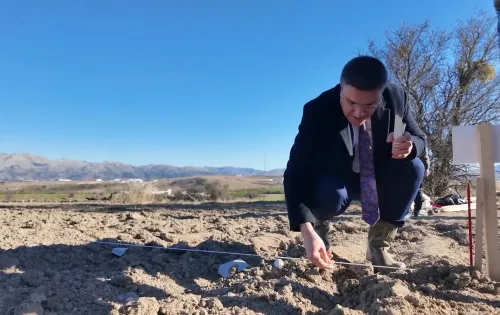
Burdur Mehmet Akif Ersoy University has carried its studies on triticale to the field in order to support agricultural production against climate change and drought risk. Within the scope of the project carried out in cooperation with the General Directorate of Agricultural Research and Policies (TAGEM), triticale seeds that have been cultivated in Ankara for three generations and determined through selection studies were brought together with the soil on MAKÜ's farm land.
The first phase of the planting work was carried out by MAKÜ Rector Prof. Dr. Hüseyin Dalgar. Within the scope of the project, the yield and performance characteristics of 83 different populations created from hybrid combinations obtained from different parents will be examined under Burdur's dry and arid conditions.
The goal is to develop a triticale variety registered in the name of MAKÜ
Project leader Prof. Dr. Siğnem Öney Birol from the Faculty of Arts and Sciences at MAKÜ stated that the increasing input costs in agricultural production, the need for labor, and the decrease in water resources are putting pressure on producers. She emphasized the importance of developing plant varieties that can use water more efficiently and have high yield potential, especially in regions like Burdur where the risk of drought is high.
Birol noted that the main goal of the study is to develop a drought-resistant and high-yield triticale variety that can be cultivated in regions with similar ecological conditions, especially in Burdur, and stated that it is aimed to create a registered variety in the name of MAKÜ by utilizing current molecular methods.
Birol stated that the project is not limited to developing a new plant variety, but also aims to support Burdur's agricultural potential with scientific studies, diversify production with alternative grains, and contribute to agricultural sustainability against climate change.
Selection will be made in 83 different populations
In the laboratory phase of the project, triticale varieties grown in Turkey were tested against drought stress. More drought-resistant varieties were identified, and their genetic characteristics were examined using molecular methods. Based on the scientific findings obtained, different parents were selected, and hybridization studies were conducted.
The hybrid combinations created in the studies that have been ongoing for about three to four years were cultivated in Ankara for three generations. Last year, selection was made by choosing 16 spikes from each of the F3 populations. The seeds obtained from these spikes were brought to Burdur this year.
In the fourth generation of the 83 different populations planted in Burdur, yield and performance characteristics will be evaluated, especially under dry and arid conditions. By continuing the selection studies under Burdur conditions, it is aimed to identify candidate lines suitable for the region's climate and soil characteristics.
Rector Dalgar: “It will provide significant contributions to the livestock sector”
MAKÜ Rector Prof. Dr. Hüseyin Dalgar stated that the triticale studies aim to reduce feed costs, which is a significant problem in the livestock sector.
Rector Dalgar expressed that there are approximately 20 triticale varieties in Turkey and stated that they aim to develop a new registered variety in the name of MAKÜ as a result of the project carried out in cooperation with TAGEM, which has been ongoing for three to four years.
Rector Dalgar highlighted that triticale can be grown in dry, saline, and unproductive lands that are not suitable for wheat cultivation, stating, “This type will be resistant to both drought and climate stress. With the results we will obtain from the trial plantings we started on our university's farm land, we aim to produce a registered triticale variety as a feed plant for the livestock sector and especially to spread it in unproductive lands in rural areas.”
Rector Dalgar expressed his belief that the project will provide significant gains to the livestock sector in the future and thanked the academics involved in the study, project leader Prof. Dr. Siğnem Öney Birol, and TAGEM experts.
With the project supporting MAKÜ's specialization efforts in agriculture and animal husbandry, the development of drought-resistant, high-yield, and regionally suitable feed plants; reduction of production costs; and contribution to sustainable agricultural production are targeted.